How Teachers Can Help Students Look Natural in School Photos
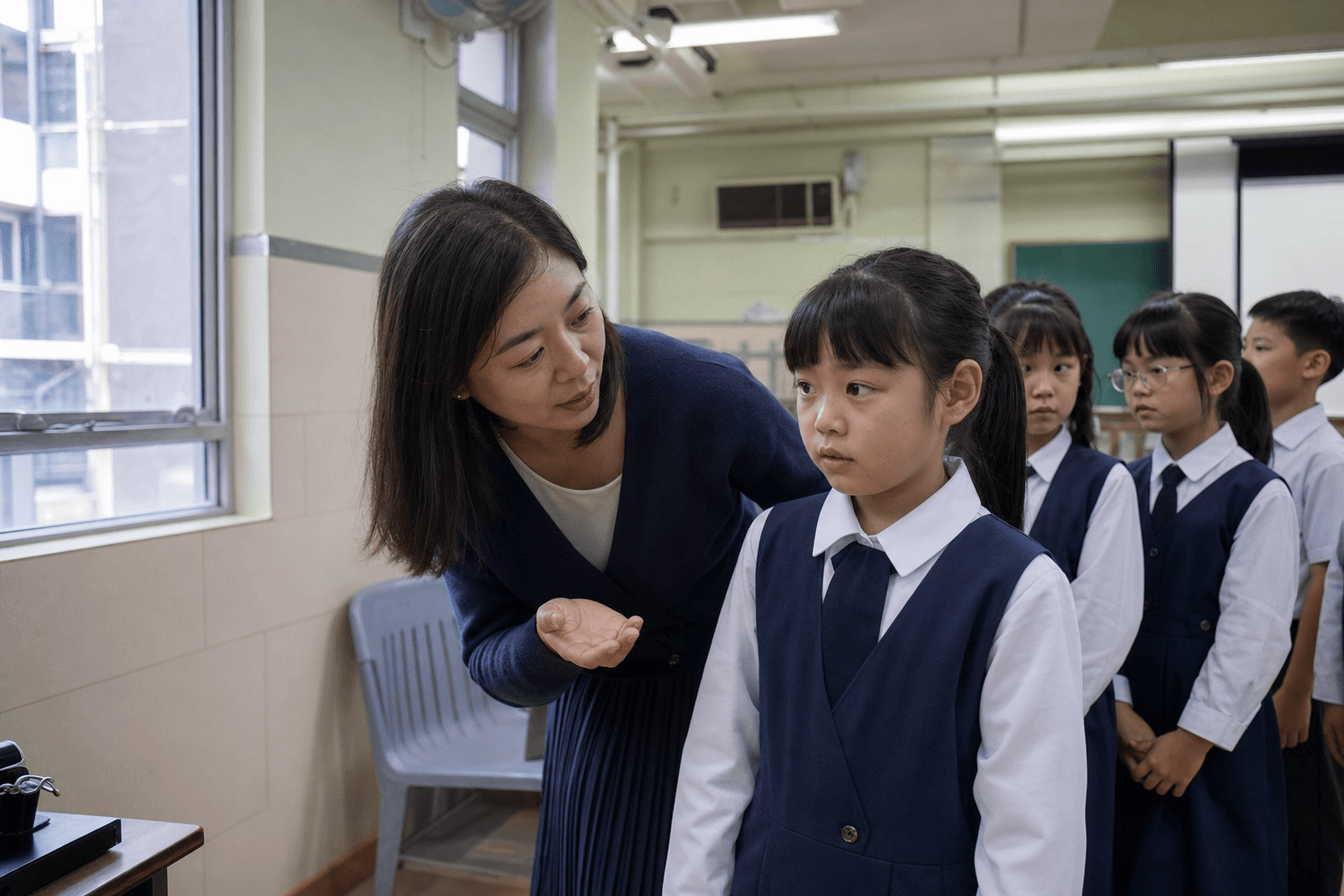
A student can be lively in class and suddenly become stiff in front of a camera.
If several adults call the student’s name at the same time, the student may simply be unsure where to look.
The school does not need to rehearse a standard smile. Reducing conflicting instructions is more useful: students should know what happens next and whose prompt to follow.
Change the goal from identical smiles to natural and alert
A class photo should feel organised, but that does not require every student to copy the same expression.
A more practical shared goal is focused eyes, a relaxed face and a settled posture.
When confirming the direction, the school can use words such as natural, alert or more formal.
These are easier for teachers and the photographer to assess than “make everyone smile more”.
Before photo day: give one simple preview
The purpose of a preview is to reduce uncertainty, not to add practice.
A teacher can explain that students will line up, take their places and then follow the photographer’s direction.
- Explain the next step: line up, take position, follow the camera prompt;
- Avoid public labels: do not repeatedly describe a student as “camera shy” in front of classmates;
- Do not rehearse a smile: remembering the process is more useful than holding a fixed expression.
On the day: do not give camera directions at the same time
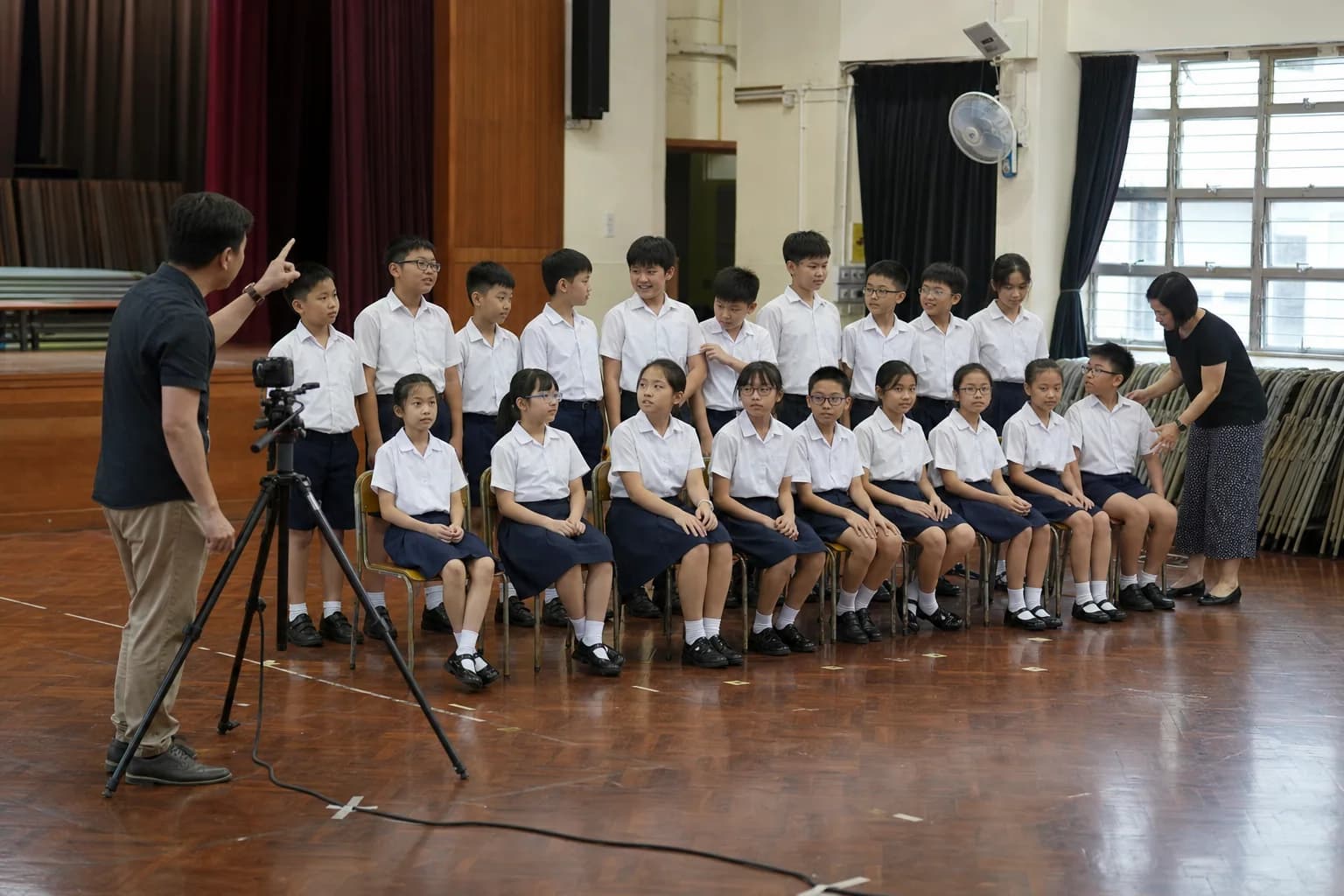
If a teacher calls a name while another member of staff adjusts clothing and the photographer asks for eye contact, the student’s gaze can move between several directions.
Define the roles before the student faces the camera.
| Role | Main responsibility | What to avoid |
|---|---|---|
| Teacher or administrator | Maintain order, check students and provide familiar reassurance | Adding extra gaze or expression prompts once the student faces the camera |
| Photographer | Guide gaze, posture and the expression needed for that frame | Giving several instructions at once |
If clothing or arrangement needs attention, complete that adjustment first and then bring the student’s attention back to the camera.
If a student becomes stiff, reduce the number of requests
More prompts are not always more helpful. Start with one request—such as looking towards the camera—then address posture or expression after the student has settled.
A teacher can stay within sight without turning the moment into a group effort to make the student laugh.
THIS FILM uses child-photography experience and short guidance to help students relax and show natural, alert expressions rather than copying one standard smile.
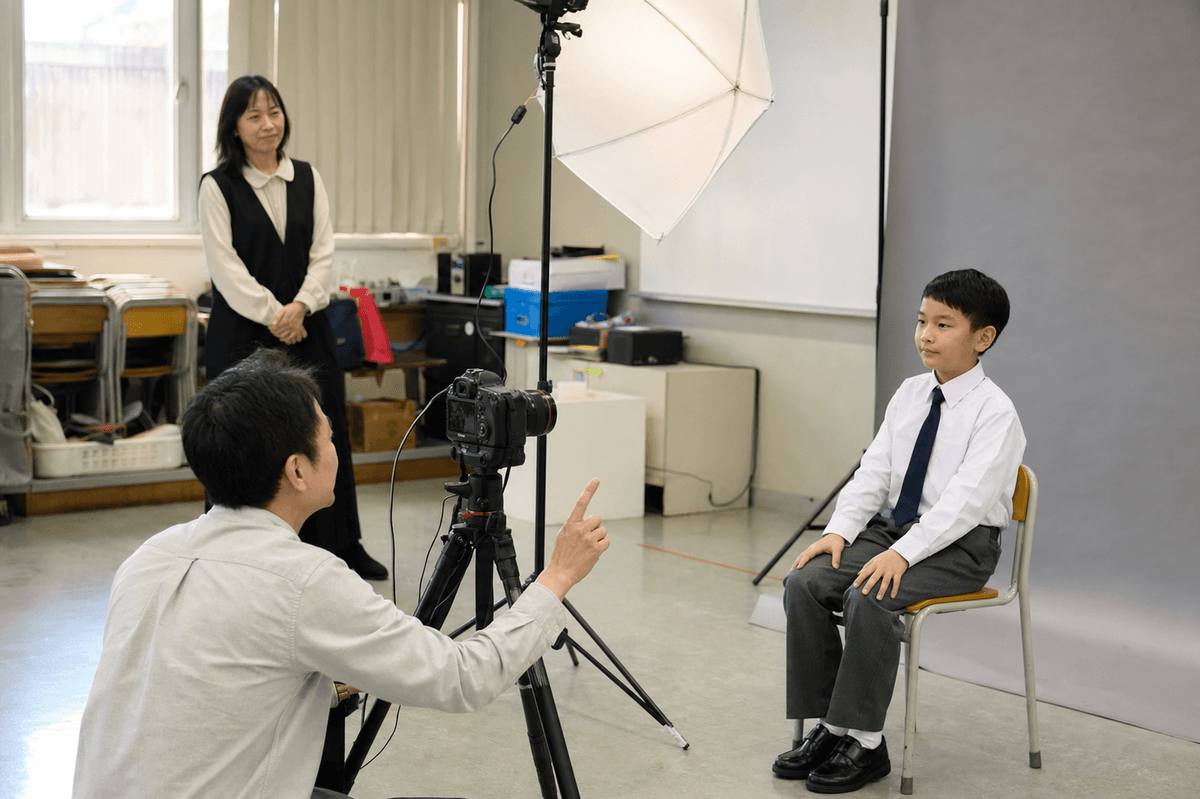
One prompt at a time gives the student a clear point of attention.
Use a sample direction to define “natural”
One colleague may prioritise smiles, another may prefer a formal look, and a third may want the students to feel lively.
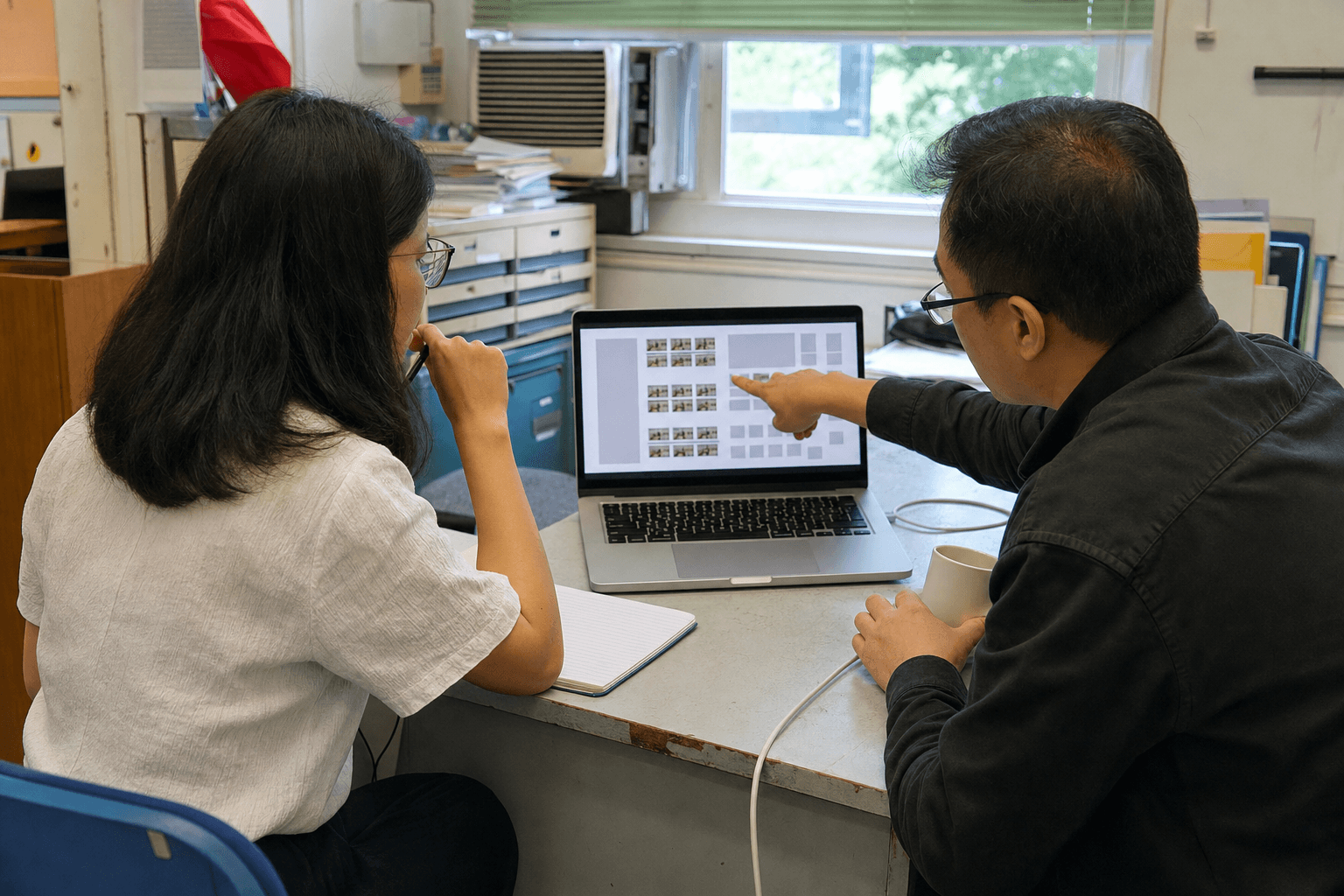
Confirming a sample direction before the main run gives the school and photographer one shared reference.
Review whether students look natural and alert, whether the broad arrangement is suitable, and whether staff are using the same expression standard.
A shared direction does not mean every student will show an identical expression.
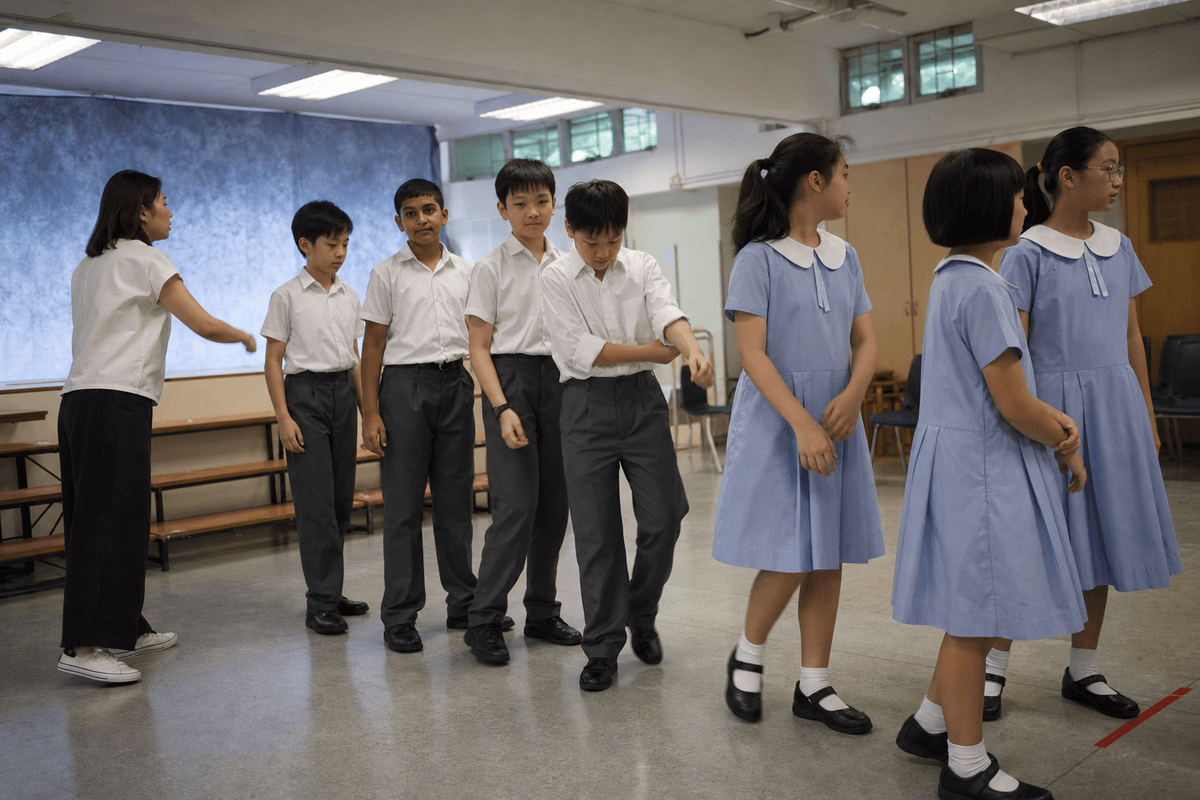
A clear transition from waiting to position helps students focus on one new instruction at a time.
Five checks for teachers
- Give a short process preview instead of rehearsing smiles;
- Let the photographer own camera and expression prompts;
- Use the teacher’s role for order, checking and familiar reassurance;
- Reduce instructions when a student is nervous and avoid public labels;
- Nominate one school representative to confirm a natural, alert or more formal sample direction.
Frequently asked questions
Must every student smile in the same way?
No. The arrangement and gaze can be consistent while each student keeps a more natural expression.
Should a teacher stand next to the camera and keep making a shy student laugh?
The teacher can remain visible and reassuring, but should avoid giving gaze or expression prompts at the same time as the photographer.
Can the school confirm the intended expression direction first?
Yes. THIS FILM can confirm a sample direction with the school before the main photography run.
Planning school photography?
Tell us which school photo types you are considering. A short message is enough to begin the discussion.
Enquire on WhatsAppYou May Also Like
What Should a School Confirm Before Student ID Photo Day?
A practical checklist for school use, photo specifications, student rosters, sample approval and exceptions before on-site student ID photography.
What Schools Should Review Before Approving a Photography Sample Direction
A useful sample review confirms the photo group, framing, arrangement and student presentation—then returns one consolidated school response.
Five Things Schools Should Confirm Before Class Photo Day
A practical handover checklist covering photo groups, student rosters, venue flow, sample direction, delivery and absences.