A natural pet portrait session starts before the camera comes out. Preparation is not about turning a pet into a trained model. It is about reducing unfamiliar variables and giving the photographer useful context: how your pet settles, what normally gets a calm response, and what may cause distraction or discomfort.
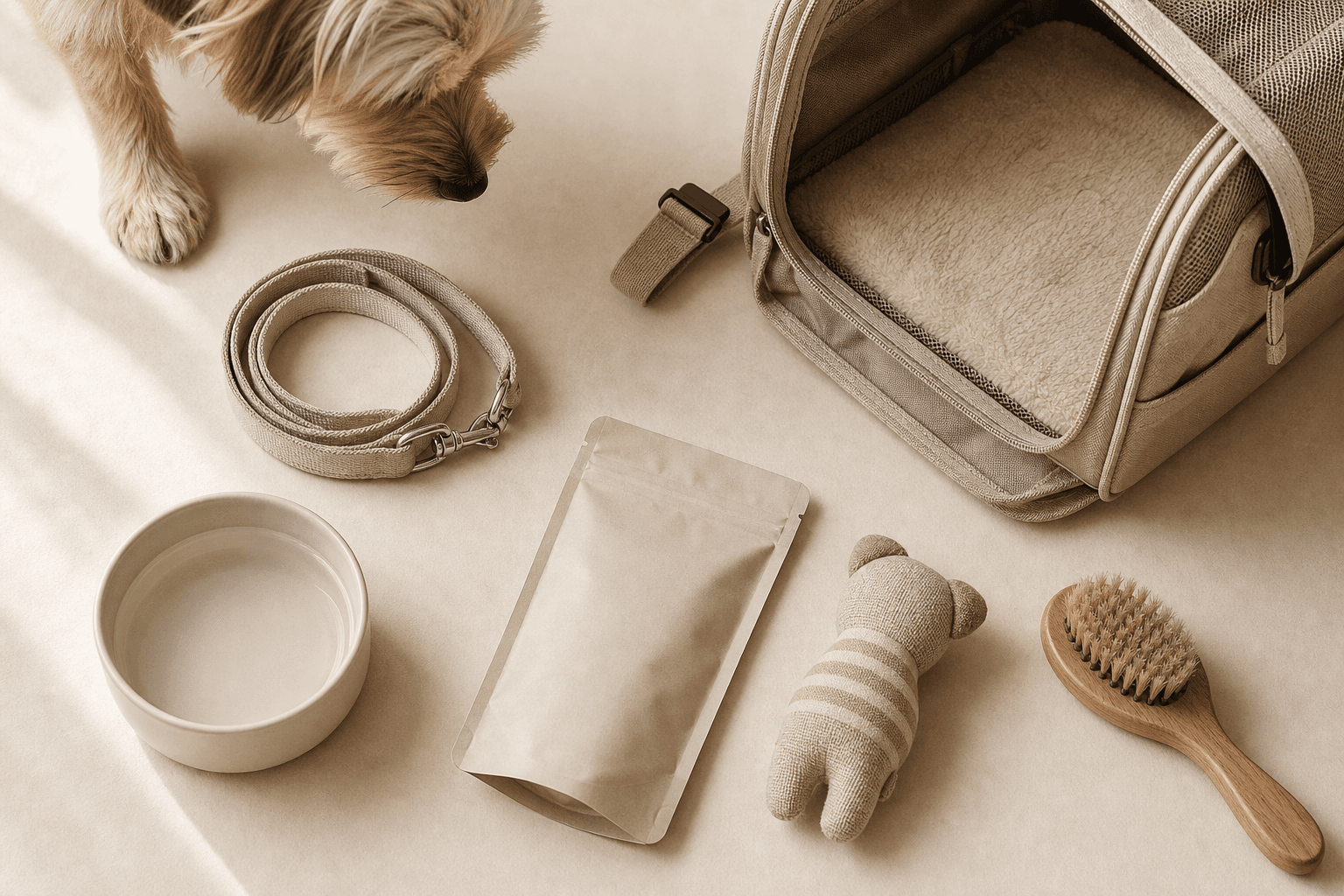
Six useful items for the day
- A lead or carrier: use a familiar, secure way to move through the building, wait and change positions.
- Water: bringing the usual water and container can make the routine more familiar.
- Small portions of usual treats: bring only food your pet already knows, while following the pet’s normal dietary needs.
- One familiar toy: choose something that genuinely gets a response at home rather than buying several new toys for the session.
- Simple grooming items: a brush and the pet’s normal cleaning items can help with a final tidy-up.
- Any necessary everyday care items: bring what your individual pet normally needs rather than changing the routine for a photograph.
What information should you share when enquiring?
- Whether the pet is a dog, cat or another species already confirmed as suitable;
- age and approximate weight or standing height;
- coat colour and length, including whether fur often covers the eyes;
- whether the pet is shy, sound-sensitive, highly energetic or strongly exploratory;
- whether another pet or any owners will join;
- preferred dates and weekday or weekend availability.
These details affect pace, camera distance, set space and package recommendations. Large dogs, multiple pets and groups should always be described before the date is confirmed.
Does a pet need grooming before the session?
Stay close to the pet’s normal grooming routine. Brushing the coat and gently tidying the eye area or paws may help, but the session does not require an unfamiliar makeover. If professional grooming is part of your own plan, choose the timing according to how your pet usually responds; it is not a fixed THIS FILM requirement.
Does a pet need clothing?
No. THIS FILM pet photography can keep the pet’s natural appearance. If your pet already enjoys wearing a simple item and you want to bring it, share a photograph first so that colour and set suitability can be checked. The session day is not the ideal time to introduce an outfit the pet has never worn.
What happens when you arrive?
Letting a pet observe the room with its owner is more useful than immediately asking it to sit on a mark. Keep your normal voice and avoid having several people call, wave toys and request eye contact at the same time. Not every image needs direct eye contact; a natural look towards the lens, side glance, listening posture, approach or short resting moment can all belong in the finished story.
Preparation notes for dogs and cats
Dogs
Bring the lead and cues the dog already knows. If sound, strangers or a new room tend to create excitement, say so in advance so the session can be planned with realistic expectations.
Cats
A secure carrier and a familiar-smelling item may matter more than several toys. Cats vary widely in how they respond to a new environment. Describe any strong fear response before booking so that studio suitability can be considered rather than assuming every cat settles on the same timetable.
Final check before leaving
- The date, weekday or holiday price, pet count and owner count are confirmed.
- The studio has the pet’s size, personality and sensitivity notes.
- The lead or carrier, water, usual treats and familiar toy are packed.
- Clothing has not been treated as compulsory.
- The selected package allows a realistic pace; a shy pet may suit Pet Story better.
Still comparing options? Read the Hong Kong pricing and package guide, then check the current details on the pet photography service page.